
How to Write a Strong Poly EAE Application
Full EAE write up guide to help you stand out.
Applying for Poly EAE but not sure what to write? This guide shows you how to write with more clarity, relevance, and direction.
Two EAE write ups you need
For Poly EAE, students will usually need to write a course write-up for each course choice and a talent or achievement write-up.
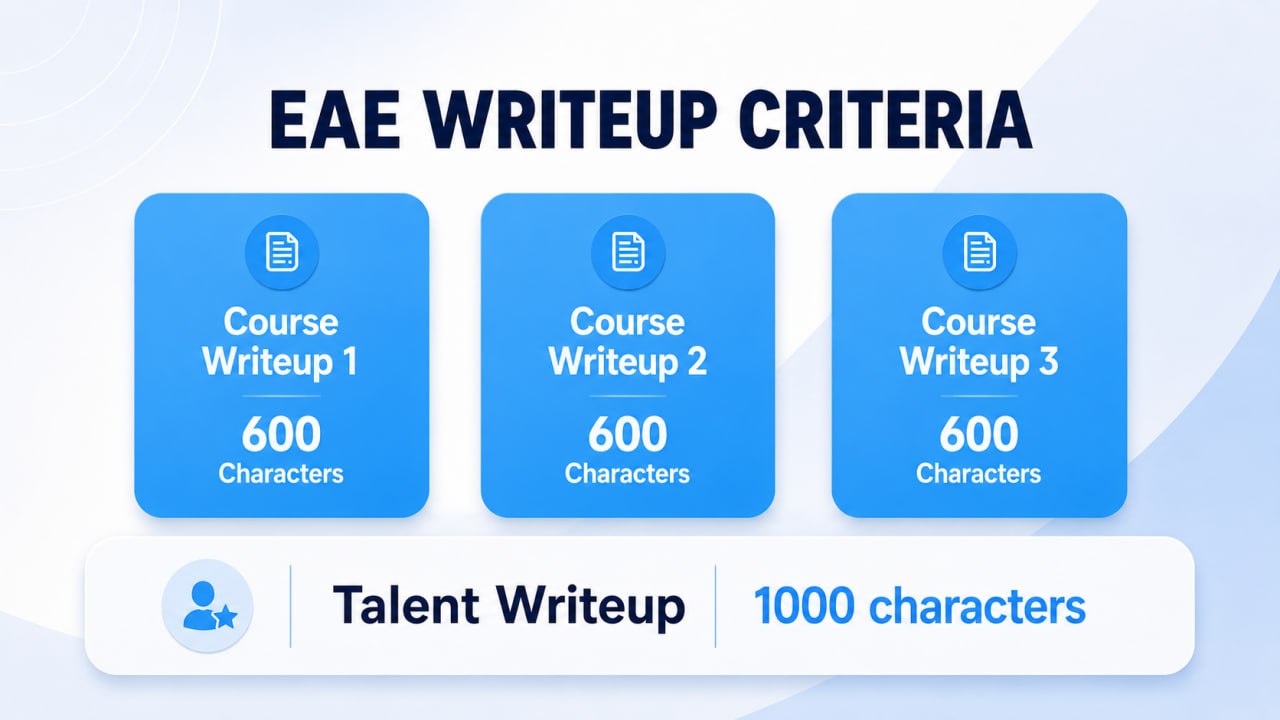
Course write-up
This is where you explain why you are applying for that specific course. It should show your interest, your exploration, your suitability, and your understanding of that course.
Do not use the exact same write-up for all three choices. Each course write-up should be adjusted based on the course, the modules, the skills required, and your reason for choosing that specific pathway.
Talent or achievement write-up
This is where you highlight your strengths, achievements, leadership roles, volunteering, projects, work experience, or other experiences that show aptitude.
Do not just dump everything in. Choose achievements that show something meaningful about you, what you learned, and how they support your EAE application.
Use HBCA structure for your write-up.
At Paradigm, we teach students to structure their EAE write-up using the HBCA Method: Hook, Brag, Clarity, and Aspiration.
H — Hook
Start with a real observation, personal experience, problem, or moment that sparked your interest.
B — Brag, but humbly
Show what you have done to explore the field, what you learned, and why it matters. Do not just list achievements.
C — Clarity of the course
Use specific course-related language to show you researched the course and are not applying blindly.
A — Aspiration
End with the direction you want to move towards and the kind of impact you hope to make.
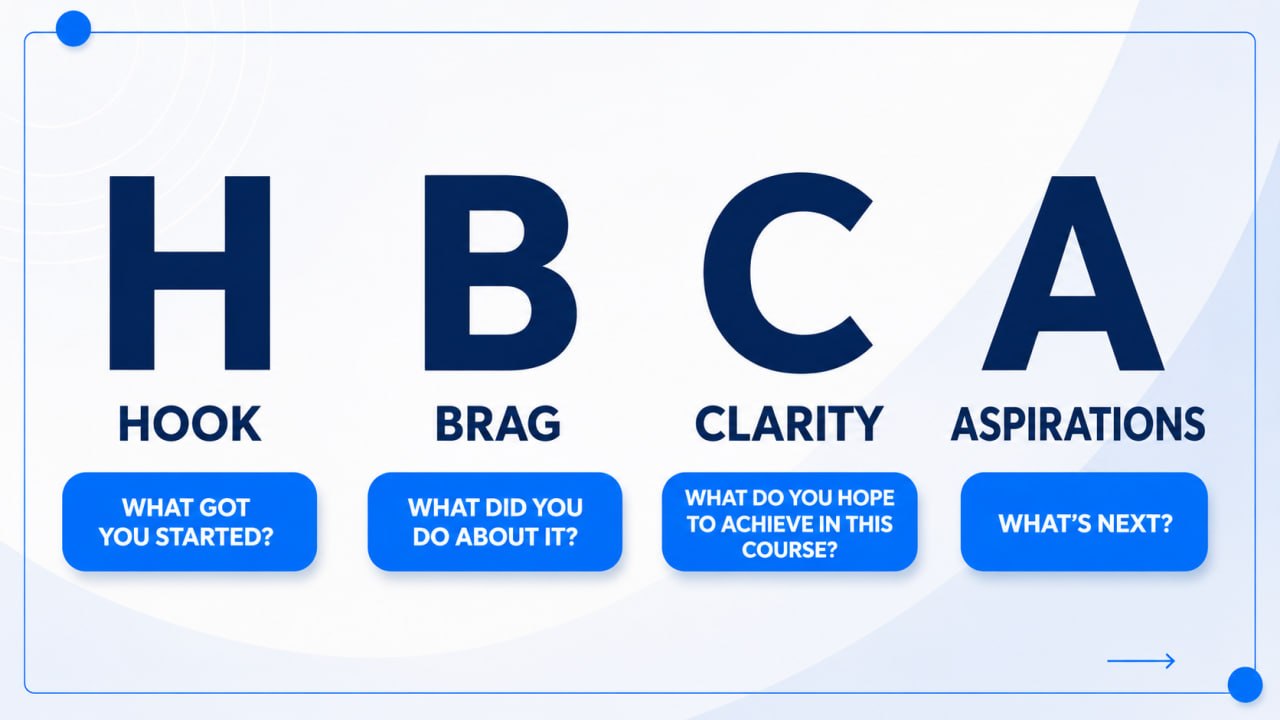
Hook, Brag, Clarity, Aspiration.
You can use this as a starting point: What sparked your interest? What have you done to explore it? Why does this specific course fit you? What do you hope to do with this pathway?

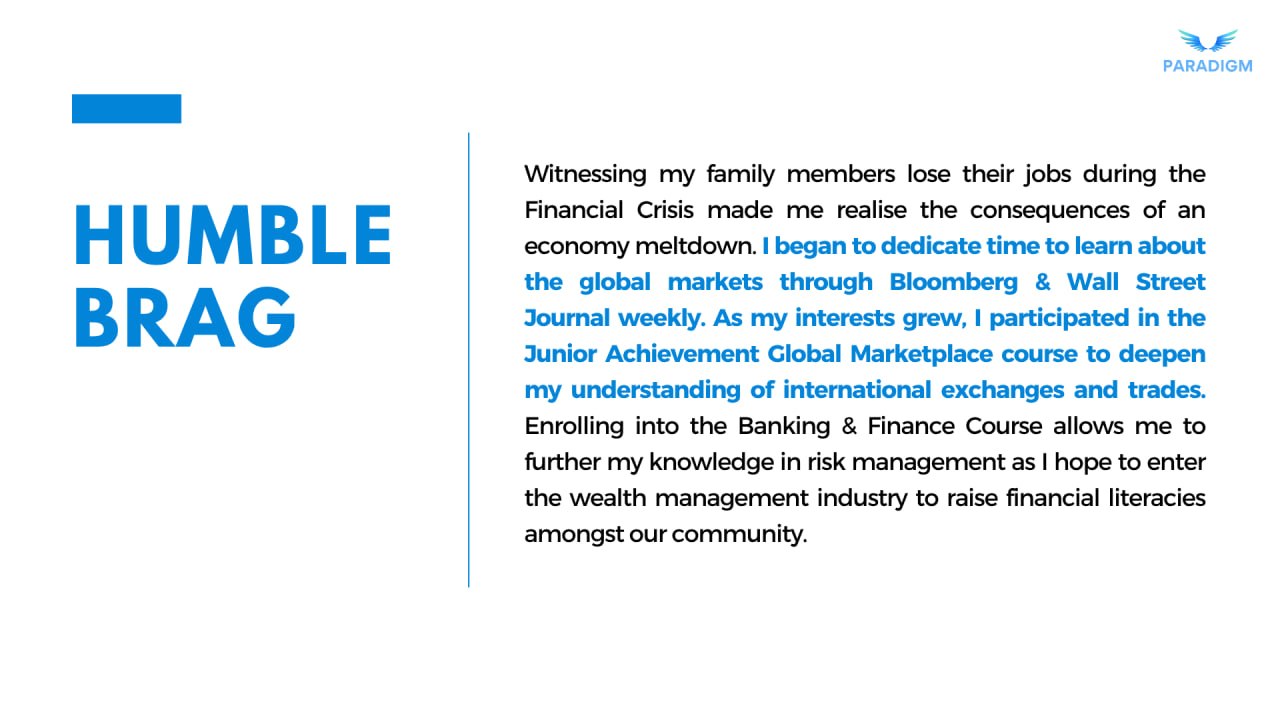
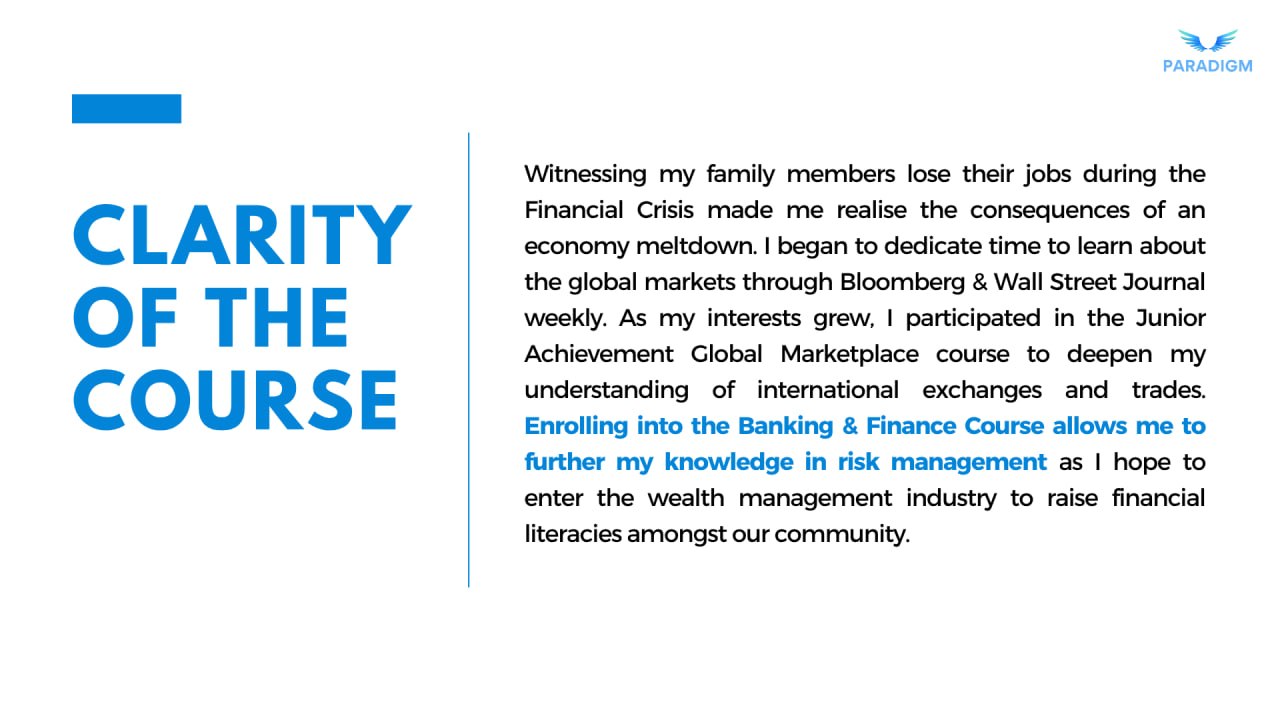
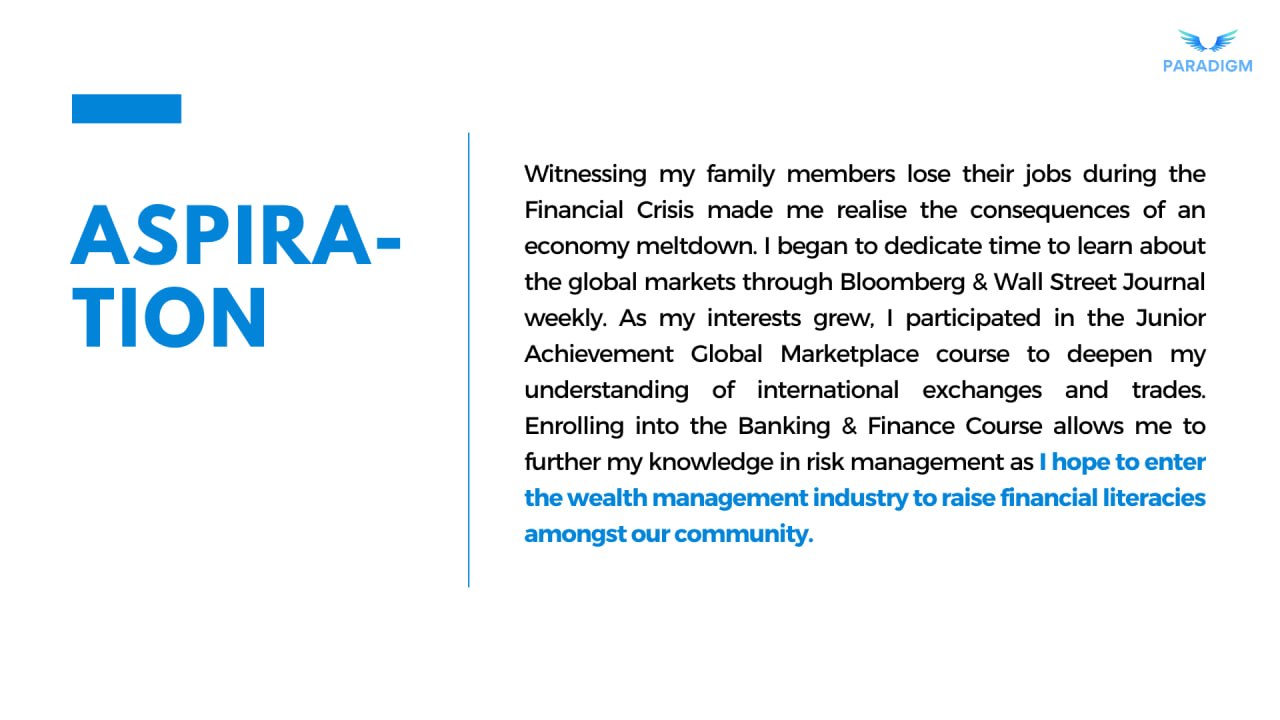
Suggested thinking structure
“I became interested in [field] when [specific experience or observation]. Since then, I have [relevant action, project or experience], where I learned [skill or insight]. This made me more certain that I want to pursue [specific course], especially because it covers [course-related area]. Through this course, I hope to [future direction or impact].”
Do not copy this word for word. Use it as a thinking structure. Your write-up should still sound like you, because you may need to defend it during the interview.
Weak vs Strong Examples
The goal is not to sound dramatic. The goal is to sound specific, believable, and relevant.
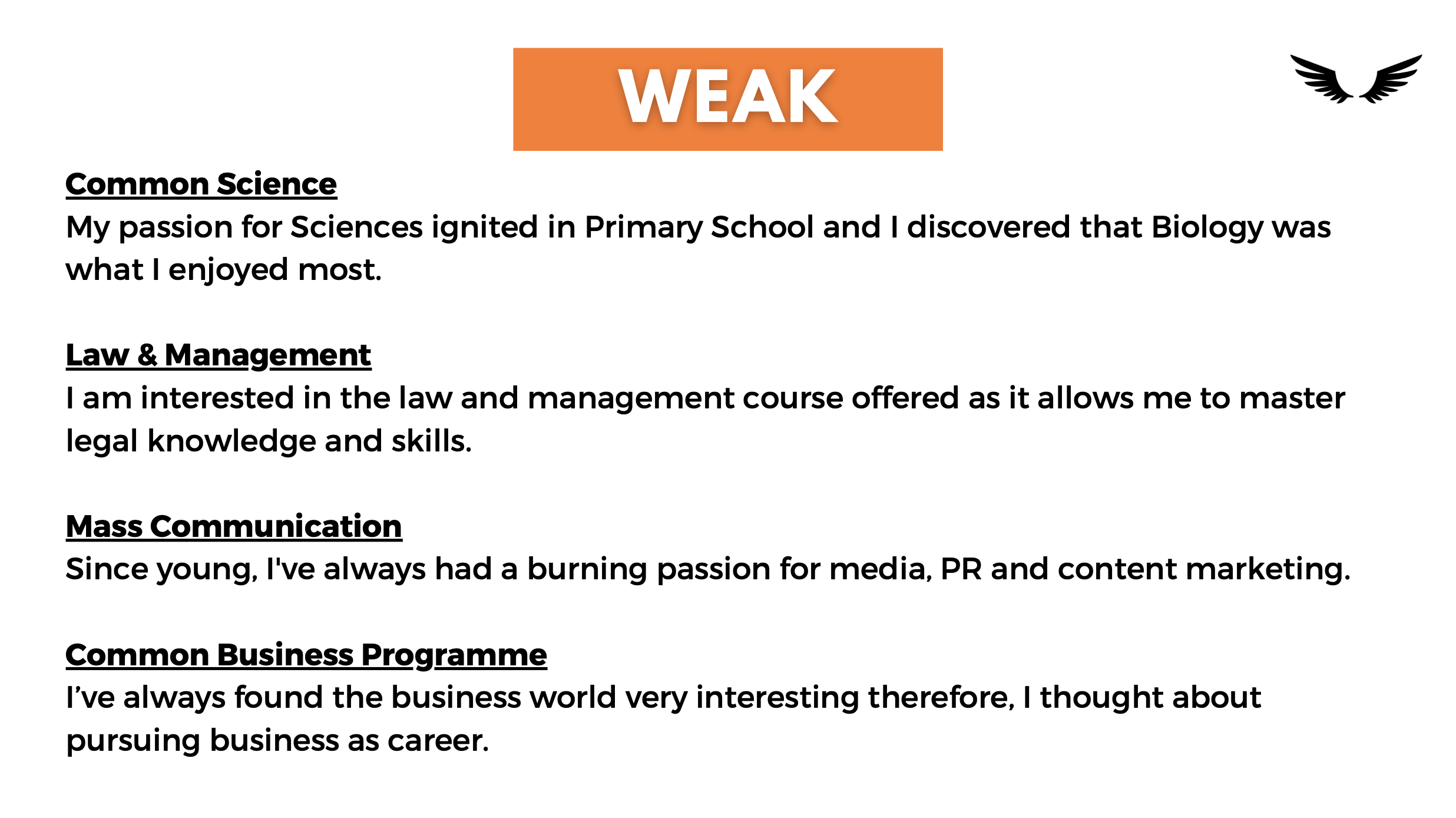
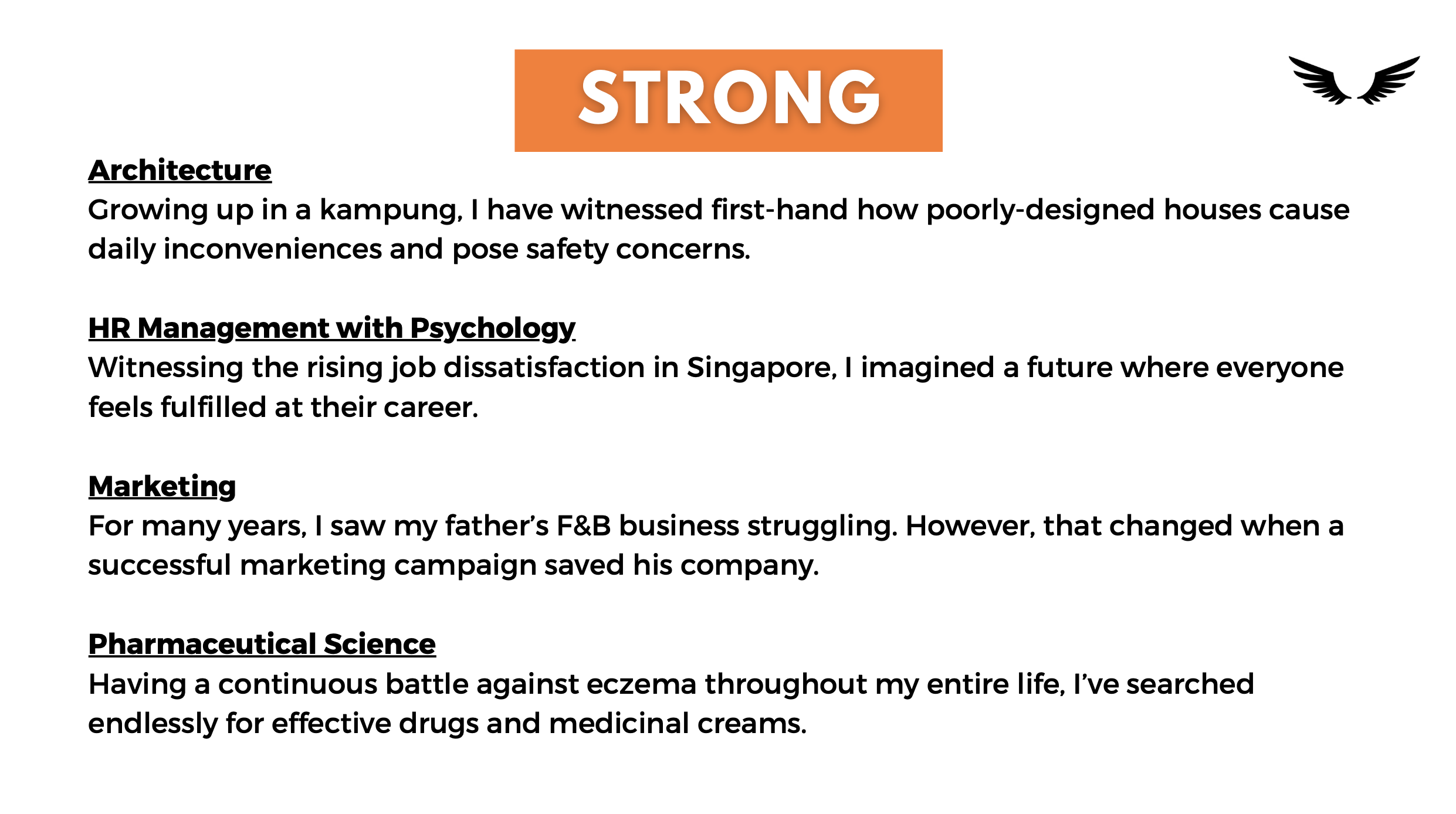
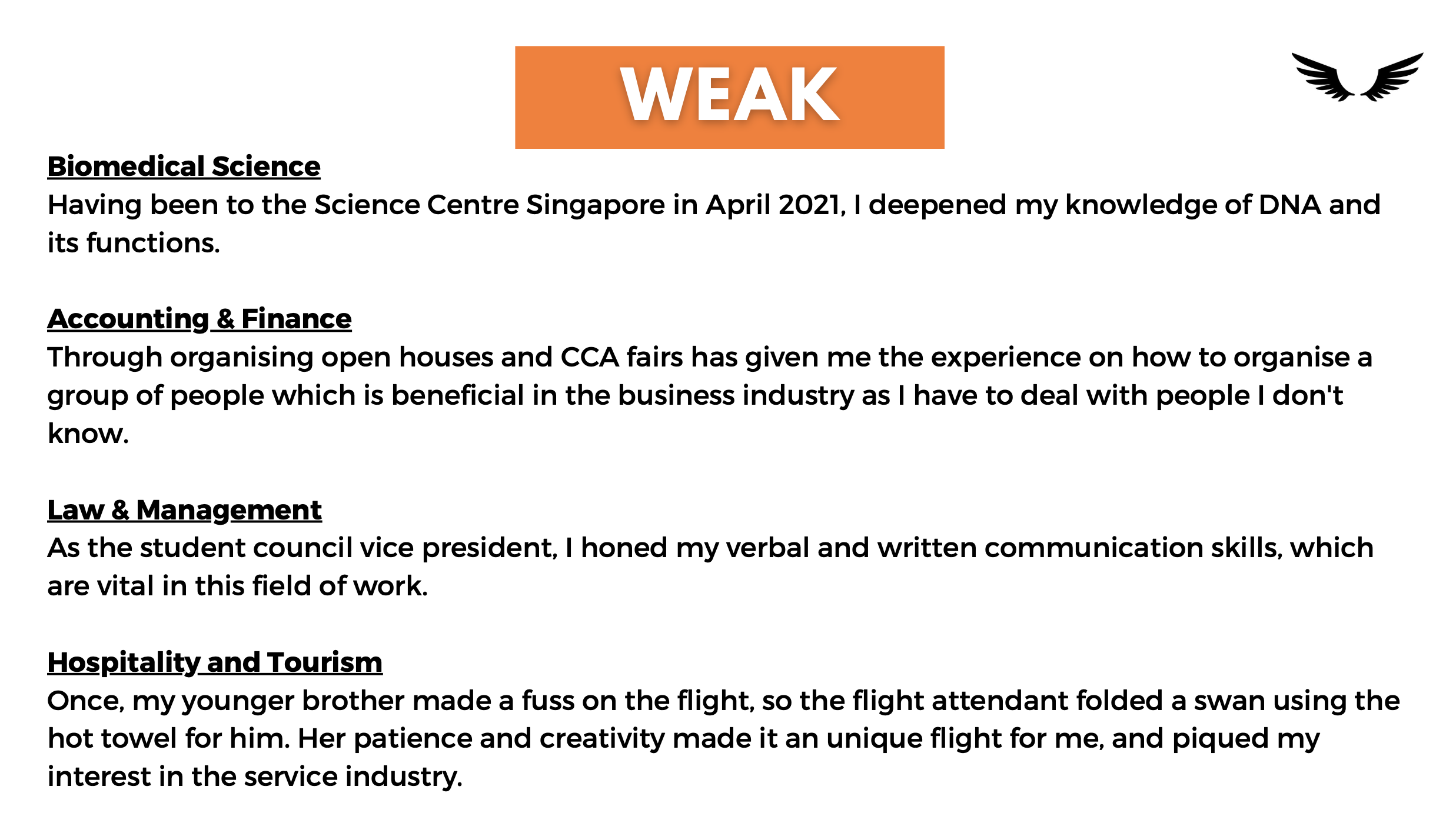
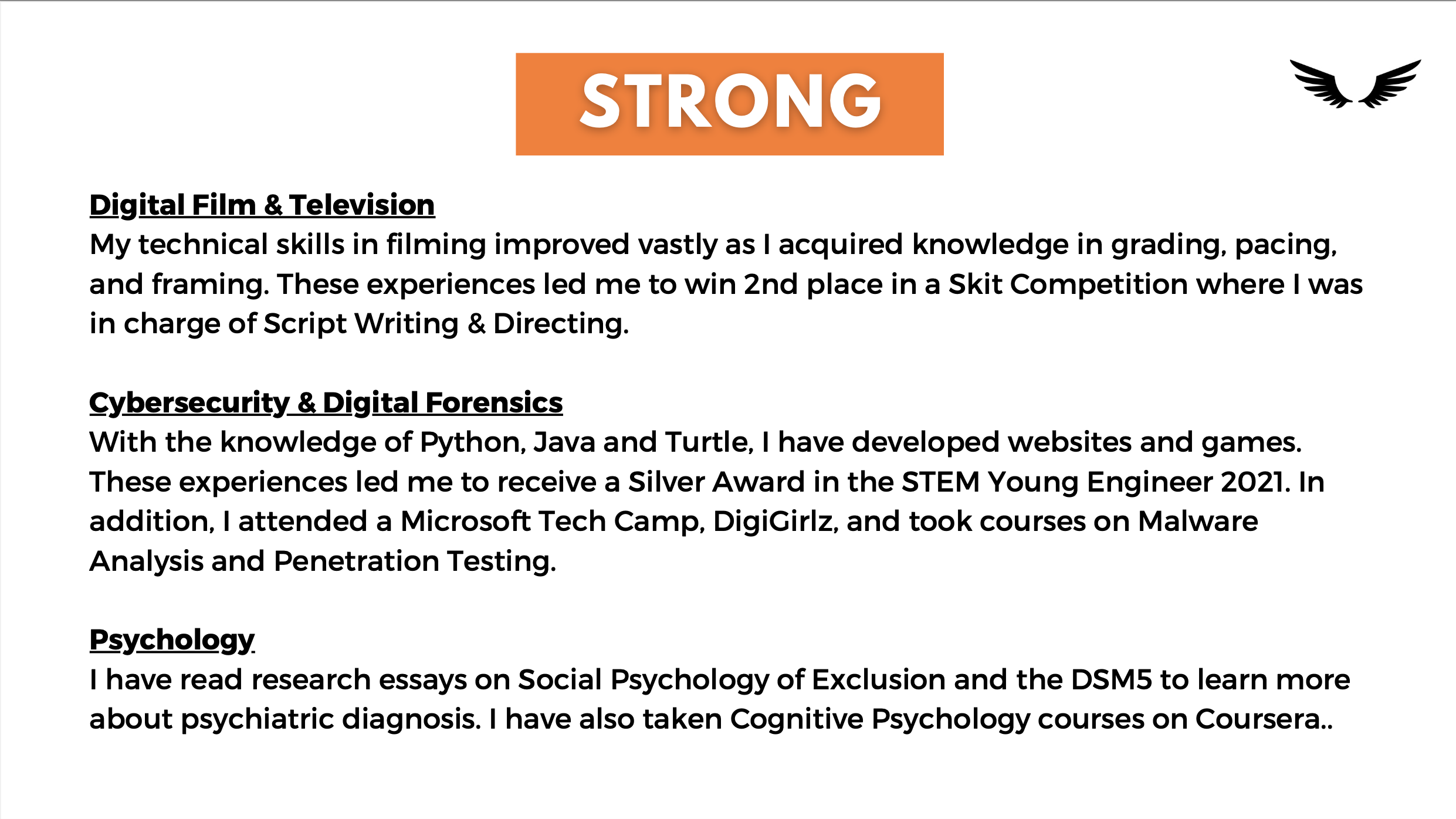
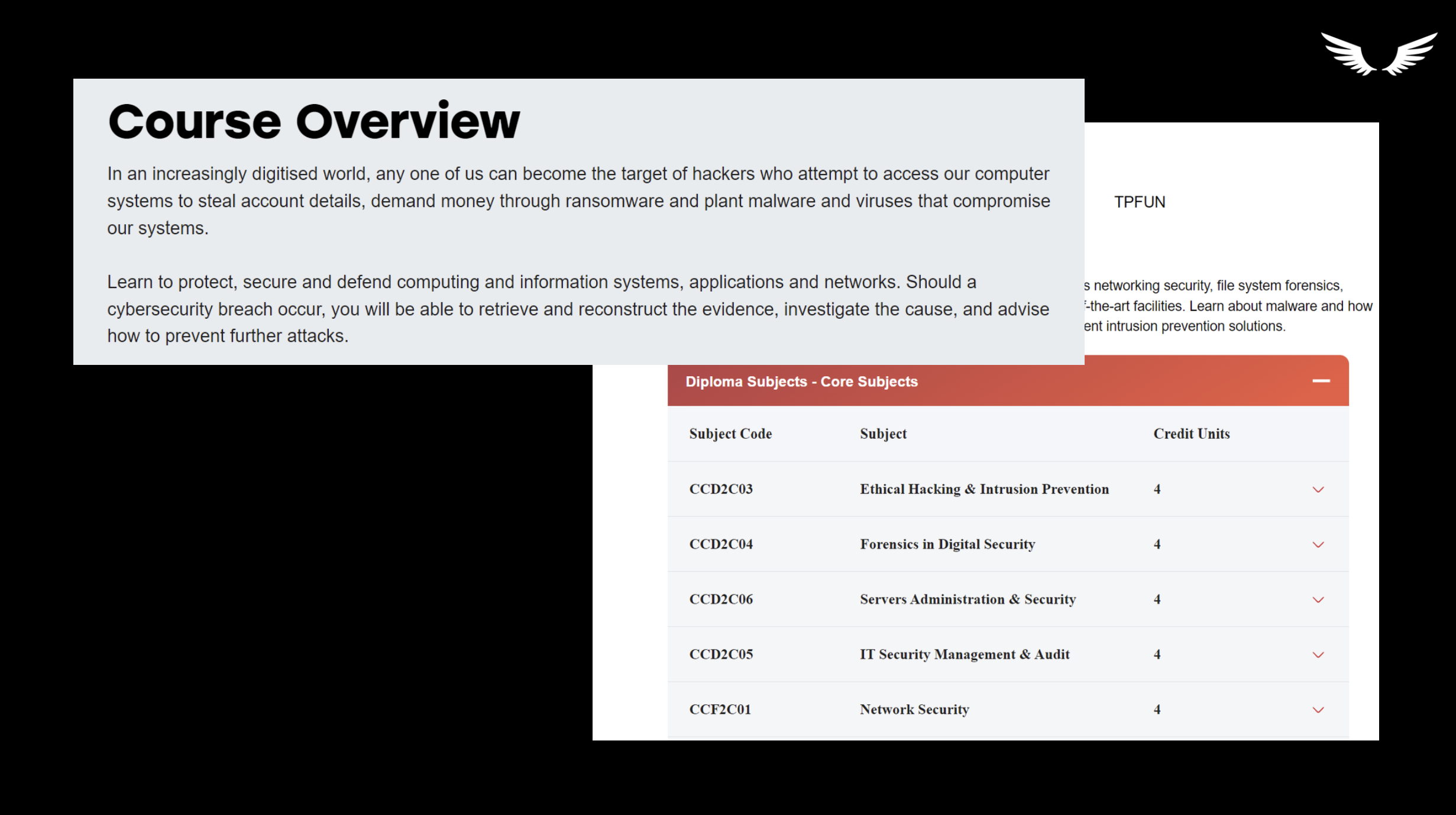

Don’t sound too generic.
If your sentence can be copied into another student’s write-up or another course application, it is probably too generic.
“I have always been passionate about this course.”
Not wrong, but too many students can write the same line.
“I am interested in business because it is exciting.”
This does not show which part of business interests you or why.
A stronger write-up sounds specific to you, the course, and your journey.
It should show what sparked your interest, what you did about it, what you learned, and why this course fits.
Ask yourself these before you submit.
Is my opening specific, or does it sound generic?
Did I show proof of my interest?
Did I explain what I learned from my experience?
Did I mention why this specific course fits me?
Did I use course-related words from my research?
Can I explain everything during an interview?
Did I avoid exaggerating?
If I were the assessor, would I believe this student is suitable?
The same strong EAE writing principles apply whichever poly you choose.
A clearer write-up helps assessors understand your course fit, your effort, and your direction. These ideas are useful whether you are applying to Temasek Polytechnic, Ngee Ann Polytechnic, Singapore Polytechnic, Nanyang Polytechnic, or Republic Polytechnic.





A strong write-up helps, but it is not the whole EAE.
Your EAE write-up is only one part of the application. Students should also prepare their portfolio, interview answers, course research, and possible aptitude tests.
